

What is the Fire Triangle?
The fire triangle is a visual model that represents the three essential elements required for fire to ignite and sustain itself. This scientific principle forms the foundation of all fire prevention and suppression strategies used by firefighters, safety professionals, and everyday people worldwide.
Think of the fire triangle as a three-legged stool. Remove any one leg, and the entire structure collapses. Similarly, eliminate any single element of the fire triangle, and the fire cannot exist.
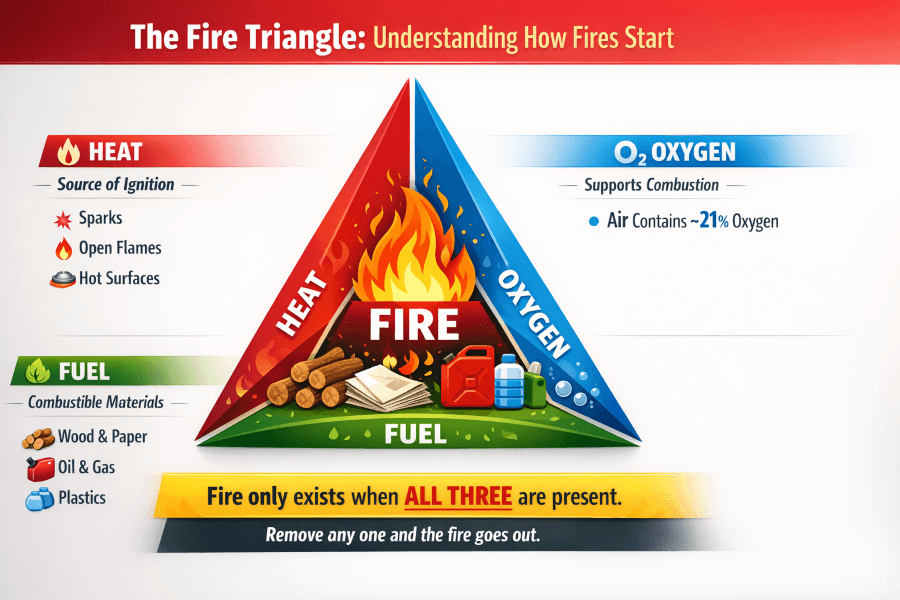
The Three Elements of Fire
Fuel: The Material That Burns
Fuel represents any combustible material that can burn. This element comes in three main categories:
Solid fuels include wood, paper, fabric, plastic, and coal. These materials must be heated to their ignition temperature before they release flammable gases that actually burn.
Liquid fuels encompass gasoline, oil, alcohol, and paint thinners. These substances produce vapours that mix with air to create combustible mixtures.
Gas fuels consist of natural gas, propane, hydrogen, and methane. These are already in vapour form and can ignite immediately when mixed with air and exposed to heat.
Understanding fuel types helps you identify fire hazards in your environment and take appropriate prevention measures.
Heat: The Ignition Source
Heat provides the energy necessary to raise fuel to its ignition temperature. Common heat sources include:
Electrical equipment generates heat through resistance, arcing, or overloading. Faulty wiring, overloaded circuits, and damaged appliances are frequent culprits in house fires.
Open flames from candles, matches, lighters, and gas appliances can easily ignite nearby combustible materials.
Friction heat occurs when materials rub together, such as machinery parts without proper lubrication or vehicles with brake problems.
Chemical reactions can produce heat through spontaneous combustion, particularly in materials like oily rags, hay, or certain chemicals.
Solar heat and lightning represent natural heat sources that can trigger wildfires and structural fires.
Oxygen: The Supporting Element
Oxygen supports the chemical reaction of combustion. Normal air contains approximately 21% oxygen, which is sufficient to sustain most fires. However, fires can burn in atmospheres with as little as 16% oxygen content.
The availability of oxygen directly affects fire behaviour. Well-ventilated areas allow fires to burn more intensely and spread rapidly. Conversely, limiting oxygen supply can slow or extinguish fires.
This principle explains why smothering techniques work effectively for fire suppression.
How the Fire Triangle Elements Interact
Fire occurs when all three elements combine in proper proportions. The process begins when heat raises fuel temperature to its ignition point. At this critical temperature, fuel releases flammable gases or vapours.
These gases mix with oxygen in the surrounding air. When this mixture reaches the correct fuel-to-air ratio, it becomes combustible. The heat source then ignites this mixture, creating fire.
Once established, fire becomes self-sustaining by generating its own heat, which continues the combustion process. This explains why fires can spread rapidly once they begin.
Fire Suppression Methods Based on the Triangle
Removing Fuel
Fuel removal involves eliminating combustible materials from the fire's path. Firefighters create firebreaks by removing vegetation during wildfires. In structural fires, they might shut off gas valves or remove nearby combustible items.
Starving the fire of fuel eventually causes it to burn out naturally.
Removing Heat
Cooling methods reduce the fire's temperature below the ignition point of available fuels. Water is the most common cooling agent, absorbing heat as it evaporates.
Other cooling methods include foam applications and certain chemical extinguishers that absorb heat energy.
Removing Oxygen
Smothering techniques cut off the fire's oxygen supply. Carbon dioxide extinguishers displace oxygen around the fire. Fire blankets physically separate fuel from air.
Foam creates a barrier between fuel and oxygen, particularly effective on liquid fuel fires.
Practical Fire Prevention Strategies
Fuel Management
Store flammable liquids in proper containers away from heat sources. Keep combustible materials organised and separated from potential ignition sources. Regularly dispose of oily rags, which can spontaneously combust.
Maintain clear spaces around heating equipment and electrical panels.
Heat Source Control
Install and maintain electrical systems in accordance with code requirements. Use surge protectors and avoid overloading circuits. Keep heating equipment clean and properly maintained.
Never leave cooking unattended, and ensure proper clearances around heat-producing appliances.
Ventilation Management
Ensure adequate ventilation in areas where flammable vapours might accumulate. However, avoid creating drafts that could spread a fire once it starts.
Install proper exhaust systems in kitchens, workshops, and other high-risk areas.
Emergency Response Applications
Understanding the fire triangle helps you respond effectively during fire emergencies. Quickly identify which element you can most easily remove to stop the fire's progression.
For small grease fires, removing heat by turning off the stove and removing oxygen by covering with a lid often works better than using water, which can spread the burning oil.
For electrical fires, removing heat by disconnecting power is crucial before applying other suppression methods.
Professional Fire Safety Implementation
Fire safety professionals use the fire triangle concept to design comprehensive protection systems. Building codes require specific separations between fuel sources and heat sources.
Automatic sprinkler systems apply the cooling principle, while specialised suppression systems in computer rooms use clean agents that remove oxygen without damaging equipment.
Fire departments train extensively on fire triangle principles to make rapid suppression decisions during emergency responses.